When Infrastructure Breaks the Code: A Real Next.js Debugging Story

Full-Stack Developer
Today, an interesting production problem reminded me why developers need to think beyond code.
I was working on a multi-tenant Next.js application that dynamically sets an application's:
Title
Description
Favicon
Everything was working perfectly until a firewall and load balancer were introduced.
The Problem
Suddenly, one of the environments started showing default branding.
At first glance, it looked like a bug in the application. But the code was perfectly fine.
The root cause?
Host header forwarding
DNS configuration
The incoming request’s Fully Qualified Domain Name (FQDN) wasn’t mapped correctly via the intended CNAME.
Because of this, when layout.tsx looked up the expected hostname, it found nothing — triggering the fallback branding logic.
The Lesson
This situation highlighted a critical point: application behavior depends on infrastructure correctness.
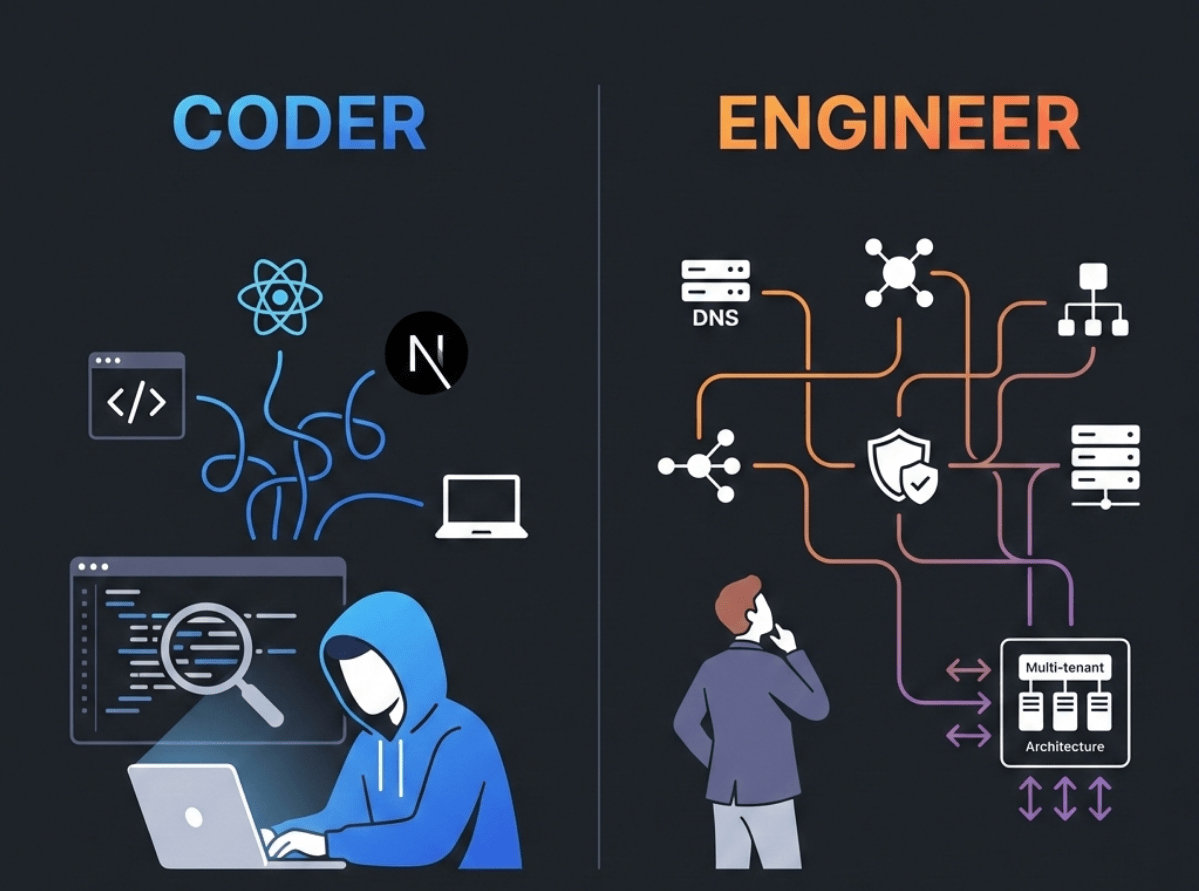
Modern debugging is no longer just about reading code. To solve production issues effectively, developers need to understand the entire request lifecycle:
DNS resolution
Load balancer and firewall forwarding
Host headers
Framework handling (Next.js)
UI rendering
Systems Thinking Matters
What this really reinforced is that debugging is systems thinking.
It’s easy to focus only on the code in front of you. But production issues often arise at the intersection of code and infrastructure.
Understanding the full flow from request creation to UI rendering isn’t optional — it’s what separates a coder from an engineer.
Code is just the beginning. Systems thinking wins.
Takeaways
Always consider infrastructure when debugging complex applications.
Multi-tenant apps require careful attention to DNS and Host headers.
Fallback logic may hide the real problem if the underlying request doesn’t reach your code as expected.
Modern engineering is more than writing code — it’s understanding how the entire system works.
Enjoyed this article?
Check out more cybersecurity news, AI updates, and tech insights on the blog, or visit my portfolio to learn more about my work.